
For some years now, One of Nigeria’s prominent archaeologists, Akin Ogundiran has been doing great work in Nigeria. The Osogbo groove is located in the state of Osun, Southwest Nigeria. The state used to be part of the present-day Oyo state before its separation. The groove is located in the state capital Osogbo. The site (Ohuntoto) was identified to be one of the earliest settlement in to the Osun groove and have yielded lots of archaeological materials about the occupation and practices of the former dwellers before the present day population’s arrival. The site had been registered by United Nations Educational Scientific Cultural Organization (UNESCO) as a World Heritage Site due to its cultural significance as some of the finds depict tie to outside world. The site over the years has been investigated by scholars. Akínwùnmí Ogundiran of The University of North Carolina Charlotte, with his team brought to the forefront, the significance and nature of this heritage to present day people.
The history of the Yoruba people is believed to have channeled from Ile-Ife being the state center of all Yoruba race. In the Yoruba lore, two influential people, Timehin and Laaroye are said to have occupied the groove as far back as the 17th century. The site proposed to be one of the earliest sites (early 17th century) in the groove was being excavated with Ohuntoto as the focal point.
Archaeology is a fascinating discipline that recovers and studies past cultures and humans using material resources that were left behind. It tries to understand and reconstruct the environment, sociology, belief systems, subsistence practices (food production and consumption), craft, etc of past populations.
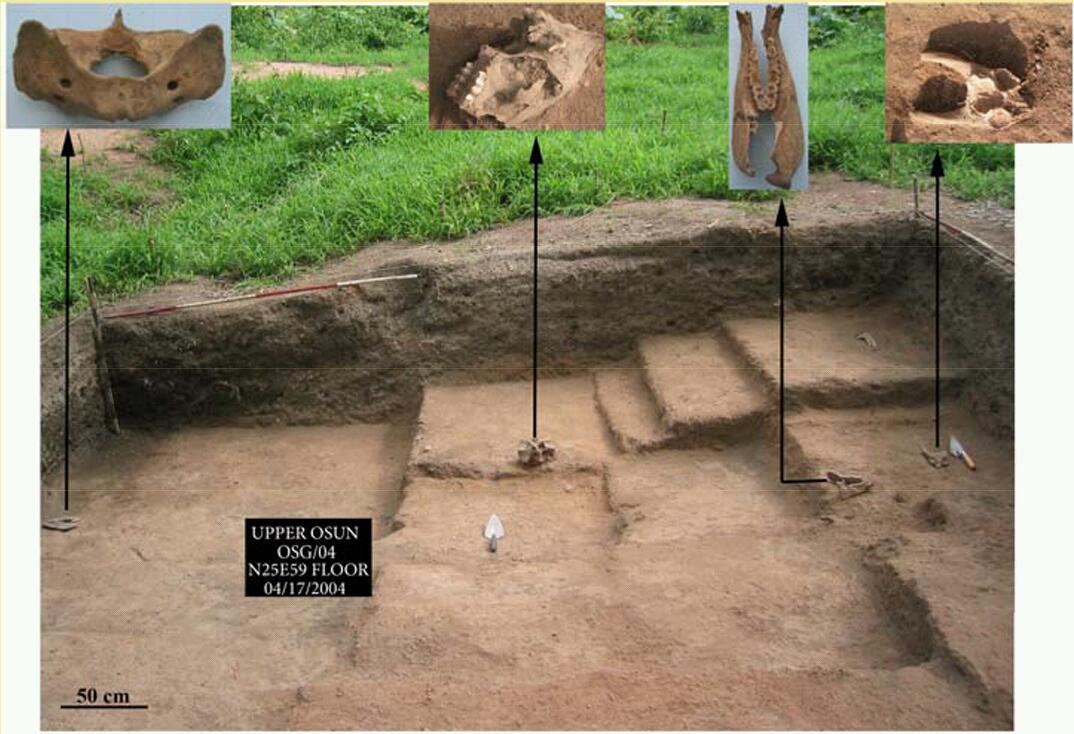
According to the archaeological evidence, Timehin was a hunter and remains of the animals butchered were found on the site (monkeys, gazelles, deer warthog etc). These bones were found insitu. They had not been disturbed or moved from their original position since it occupation (1590 and 1620 AD).
The site was later occupied by Laaroye who according to the historians migrated from Ipole-omu which was root place of Timehin. He transformed the site into a metropolitan community made up of people of diverse occupational prowess. The site has produced significant evidence of cloth dyeing and glass bead production.
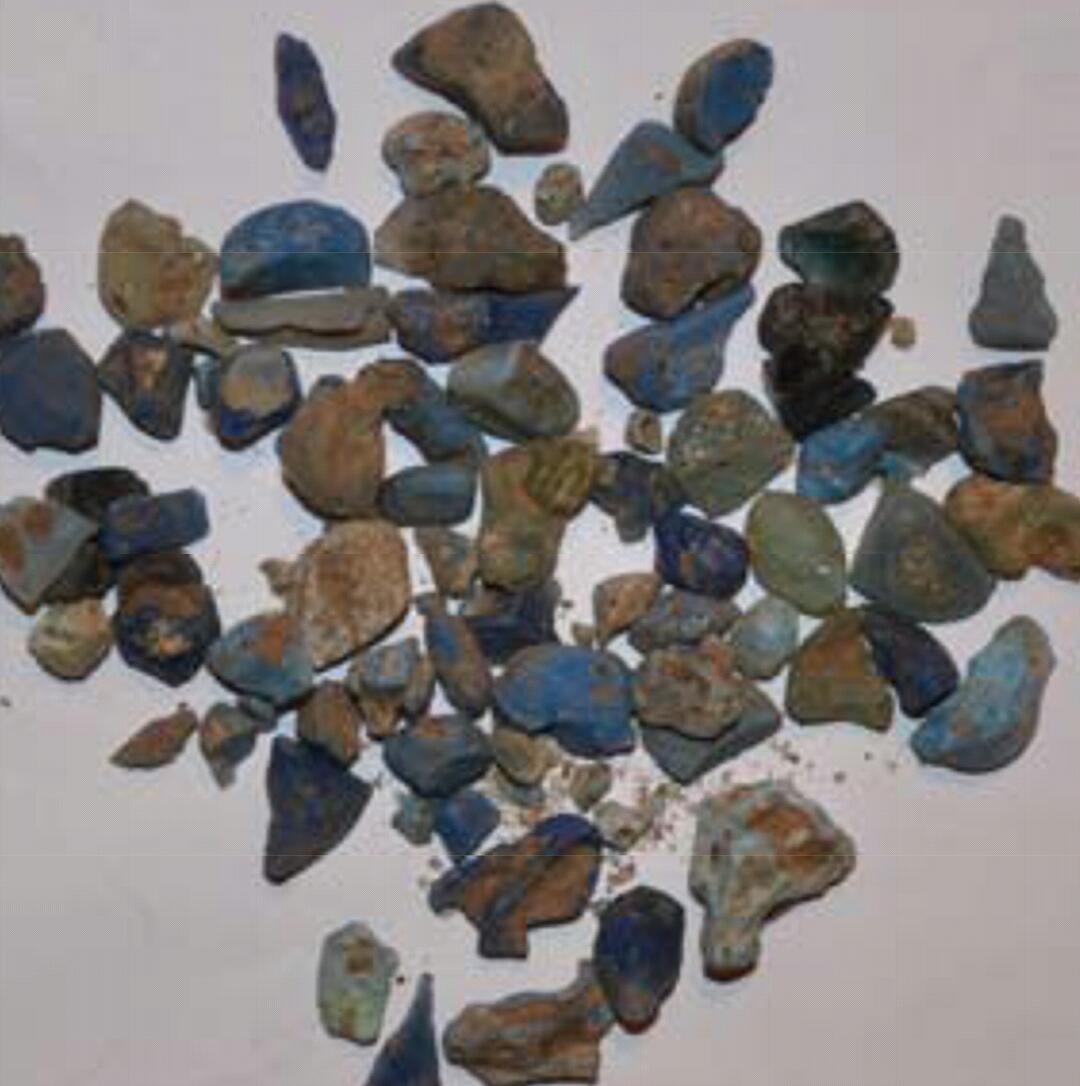
By the early 17th century, the commercial prowess of the Osogbo community had grown so much that it became the confluence point for all walks of life thereby consisting of people from different part of the region (Old-Oyo, Ijeshaland, Ijebuland, Owu Europe and Arabia etc). Artefacts such as glass bead crucibles and glass cullet (glass wastes) dating to Laaroye’s period have been recovered. It is one of the first sites to provide evidence of bead production in Yorubaland and West Africa.
Glass beads production requires a proficient knowledge of chemistry and geology. This to a plausible extent infers that our ancestors were scientist who understood nature and it applications for the improvement of their lives.
The production of the these glass objects gave Osogbo the ivory tower position and raised her status and wealth bar, making it the political capital of the state , a loci of influential guests and kings, till date. The community traded goods (Bangles, ornate comb, metal arrow heads and domestic knives) with other communities including Ejigbo, kuta and Isundunrin another town renowned for its large-scale iron production. Transatlantic trades were also carried out in the period (17th – early 18th centuries).
In the excavation of the grove, a pit filled with pegmatite powder and flakes of about 60cm in depth was excavated and it was interpreted to be the bulk raw materials used for glass and pottery production. Pegmatites are the bulk raw materials used for glass and pottery production. Pegmatites are coarsely crystalline granite that are rich in feldspar-mica minerals. According to Professor Ogundiran, “it is this type of minerals that were used for making glass in Ile-Ife and possibly Osogbo. They are responsible for the high potash and alumina found in what we now call Yoruba glass” a term coined by Professor Ogundiran and his colleague Professor Ige, a geochemist (Ogundiran and Ige 2015)
Other finds from the site include cowries, complete pot (which was used as a bank where over 100 cowries were kept as safe and dated to about 300 years old) and Tobacco pipes (which were said to have been traded in by the Europeans with the tobacco plant from the new world (Brazil) dated to the 16th century). The smoking pipes are believed to be expensive entities which could only have been acquired by the rich individuals.
Finally, Over 15,000 potsherds have been recovered from the Ohuntoto site with varieties of pots and bowls for domestic and commercial usage. The ceramic materials provide a good source of information on subsistence practices, aesthetic prowess, ceramic technology, regional interactions and trading networks of the period.
Akin Ogundiran and his team succeeded in shedding light on the two occupations, practices of the people who inhabited the Ohuntoto site for centuries. The Osun-Osogbo groove receives tourists annually during its annual festivities and it highly recommended a must see heritage tourist site in Osun state Nigeria.
All images are from Akínwùnmí Ogundiran’s archaeological excavations.


 Nigerian Archaeology Gist
Leave a comment